
Two different constructions dominate the blackout roller blind market: 3-pass acrylic coated fabric and foam-back (foam laminated) fabric. Both deliver 0% light transmission on the spec sheet, yet they differ in hand, weight, durability, acoustic behavior and cost — and specifying the wrong one for a project shows up years later as pinholes, delamination or a “cheap” hand in a premium room. This guide explains how each construction is made, where each genuinely performs better, and how to choose between them for hotel, office and healthcare projects.
What “blackout” actually means — and what it doesn’t
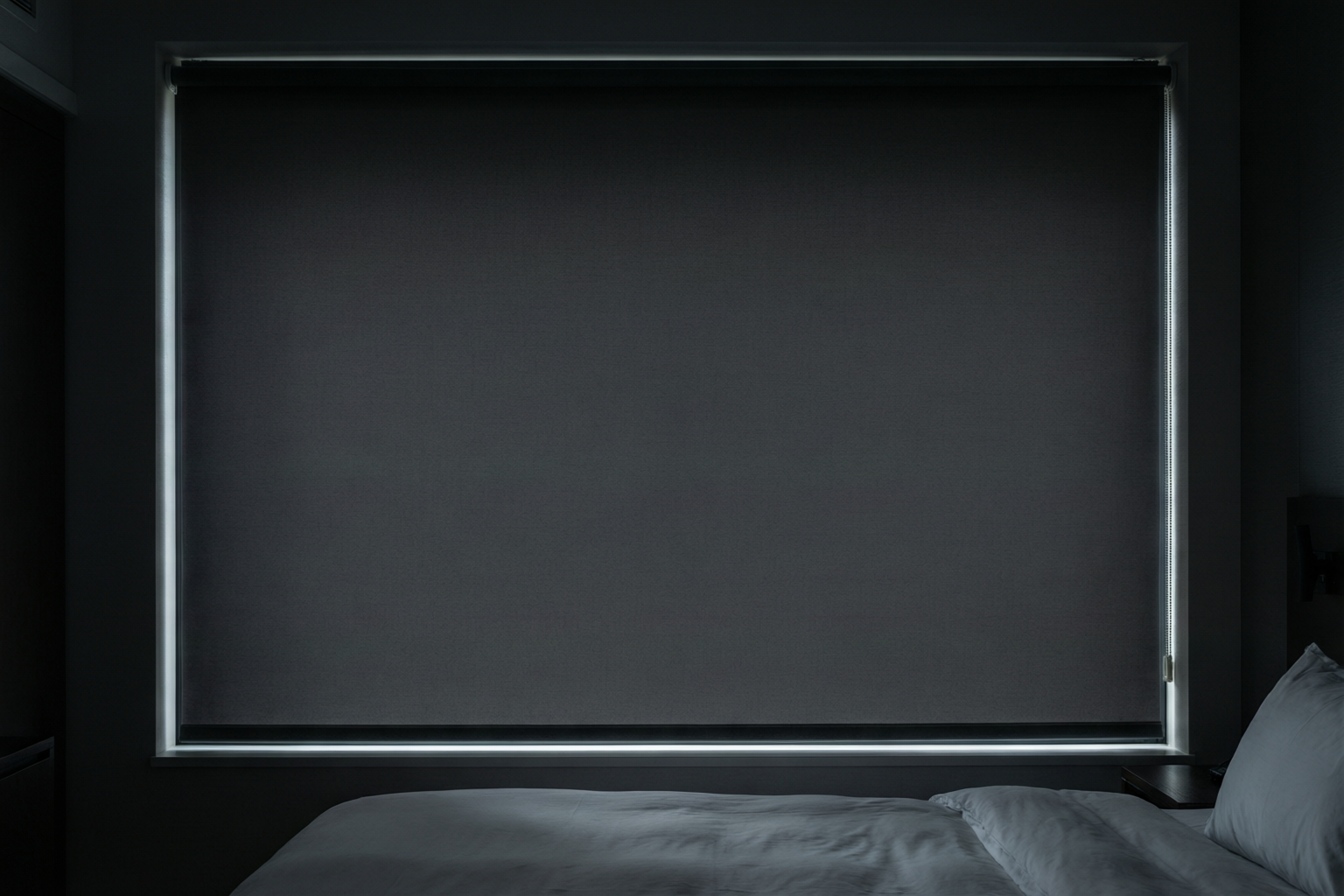
A blackout fabric transmits 0% of visible light through the material itself. That is distinct from dim-out fabrics (90–95% blocked) and from room darkness, which also depends on side channels, headbox and edge gaps — a perfect fabric in a poor track still leaks light at the edges. The construction question is therefore: how does the fabric achieve 0% transmission, and what trade-offs does that method impose? Today’s market answers with two methods: multiple thin coating passes, or a single thick foam lamination. For the broader light-control vocabulary, see our blackout vs dim-out guide.
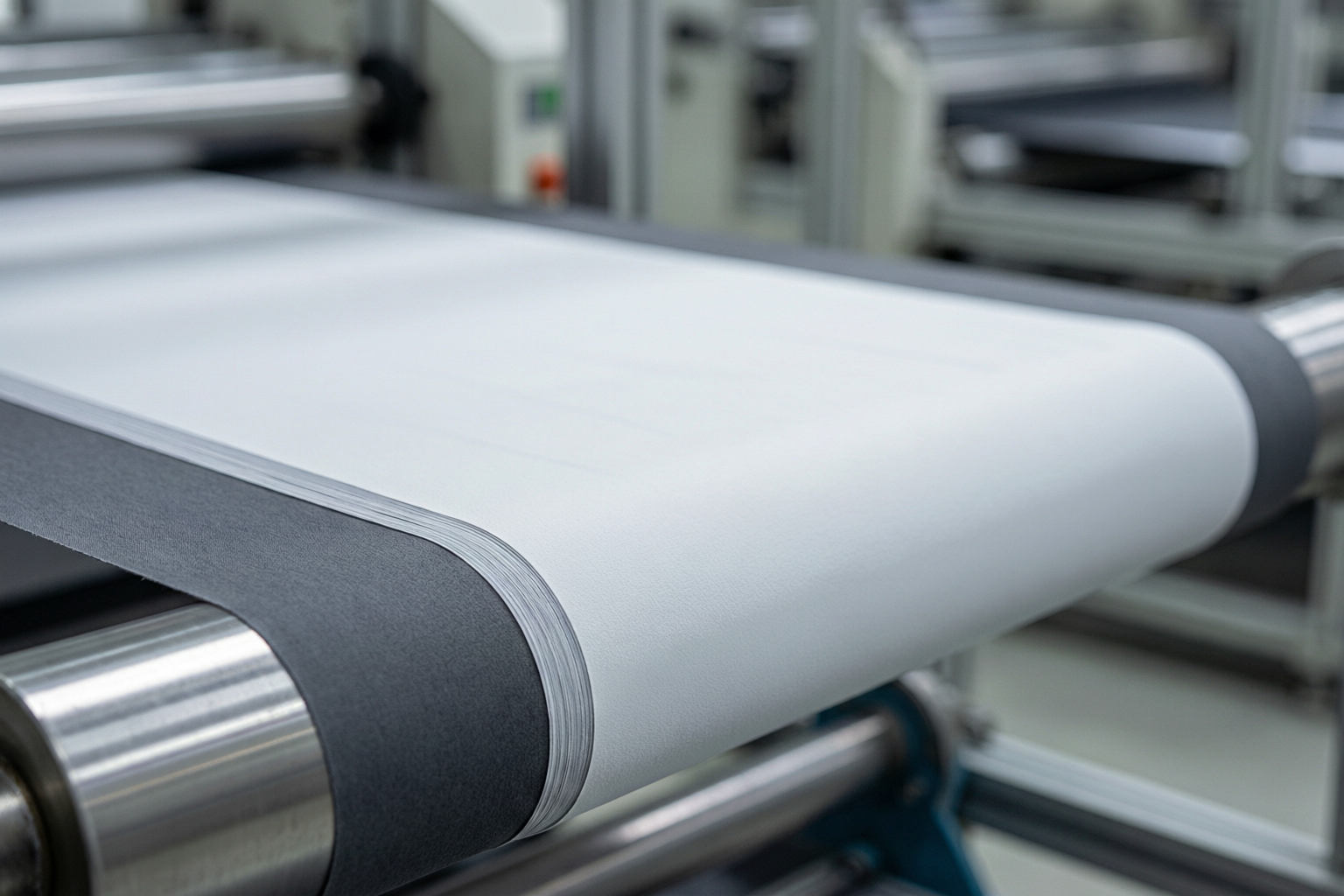
How 3-pass coated blackout is made
A 3-pass fabric starts with a woven or knitted polyester base, then receives three successive acrylic coating passes on the back: typically a light-colored first pass, a black middle pass that does the actual light-stopping, and a white or colored face pass that gives a clean, printable back side. Each pass is thin and cured before the next, so the finished fabric stays relatively light (commonly 280–380 g/m²) and flat, with a smooth painted-like back surface. Quality lives in the coating line: even viscosity, dust-free conditions and controlled curing prevent the micro-pinholes that are the classic failure mode of coated blackout.
How foam-back blackout is made
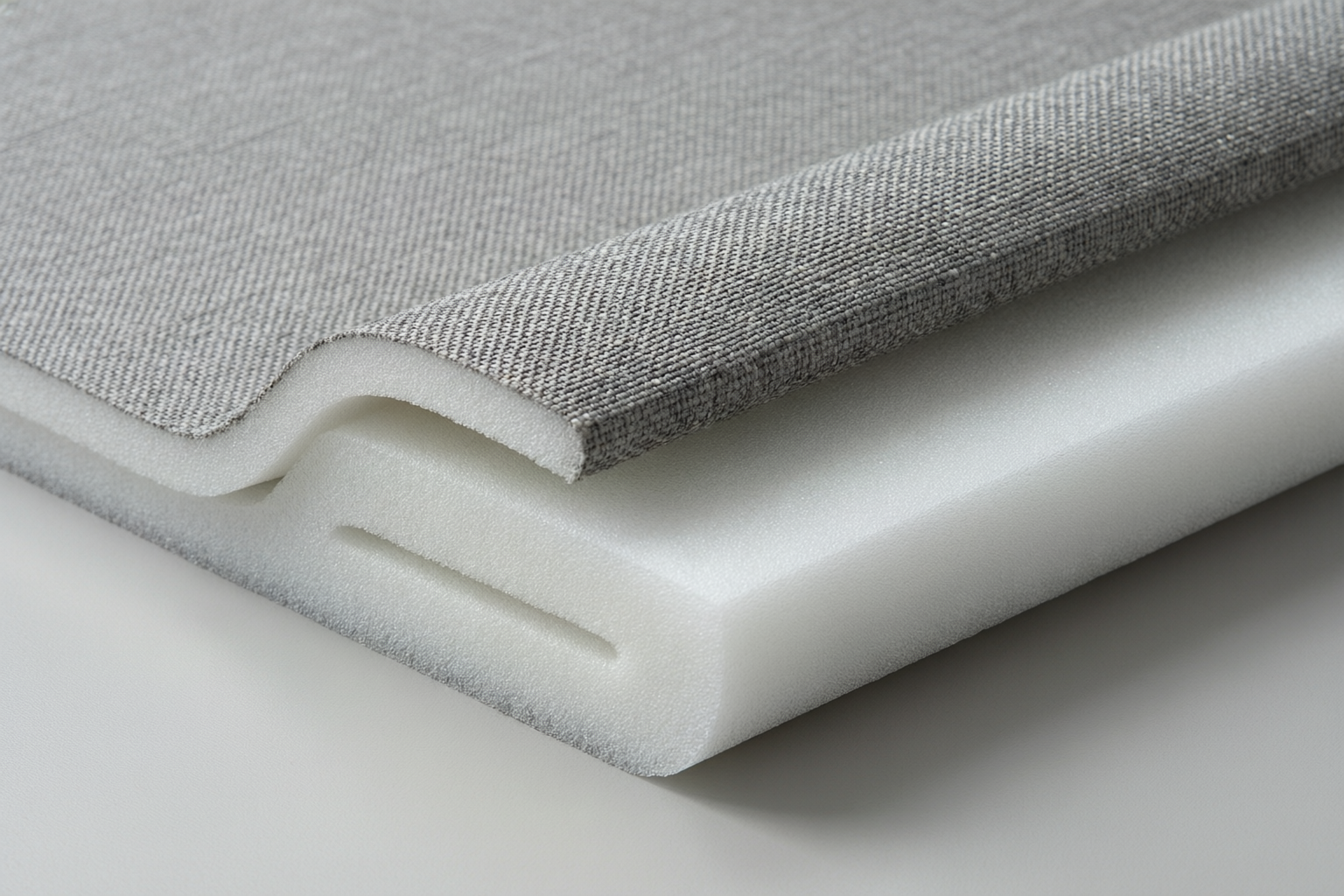
Foam-back blackout laminates a single thick layer of white acrylic foam (a foamed coating, not a sponge insert) onto the base fabric, usually over a black intermediate layer — sometimes called 2-pass + foam. The foam layer is hundreds of microns thick, which is why foam-back fabrics feel heavier (often 400–520 g/m²), softer and more opaque to the touch. The thickness also damps sound slightly and hides small weaving irregularities, giving a plush, uniform face. Its classic failure mode is different: heat, humidity and hard folding can, over years, delaminate the foam or leave crease marks.
Head-to-head: weight, hand, drape and durability
- Weight & roll size — 3-pass is lighter, so larger rolls and wider widths ship cheaper; foam-back adds freight and headbox load.
- Hand — foam-back feels softer and more substantial; 3-pass feels crisper and flatter.
- Drape & flatness — 3-pass hangs very flat (good for wide, tall drops); foam-back can show a slight curl memory after long rolling.
- Durability — 3-pass resists humidity but can pinhole if the coating is scratched; foam-back resists abrasion pinholes but fears sustained heat/humidity and sharp creasing.
- Acoustics — foam-back’s mass gives marginally better sound absorption; relevant in echo-prone rooms.
- Cost — 3-pass is typically the more economical construction at equal FR certification.
Which construction for which project
- Hotel guest rooms (volume) — 3-pass coated: flat hang, light weight, cost control, and straightforward FR treatment; specify a scratch-tested coating spec.
- Premium suites & residential-style projects — foam-back for the plush hand and acoustic feel guests associate with quality.
- Offices & media/training rooms — either; choose 3-pass for wide-format drops over 2.5 m where flatness matters.
- Humid climates & coastal projects — prefer 3-pass; if foam-back is required for hand, verify delamination test data at 40 °C / 90% RH.
Fire retardancy and certifications for blackout fabrics
Coating chemistry decides how easily a blackout construction passes fire standards. Both constructions can be delivered NFPA 701, M1 or B1 compliant, but the route differs: 3-pass fabrics usually incorporate FR additives in the base and coating; foam-back must keep the foam chemistry compliant without yellowing. Always request the test report for the exact construction and colorway you are buying — a passed test on a dim-out sibling proves nothing. See our NFPA 701 vs M1 vs B1 guide for the standard differences, and note that modern acrylic coatings are PVC-free by design; where projects demand phthalate-free chemistry as well, our PF PVC-Free Eco series covers the sustainable specification side, alongside OEKO-TEX / GRS / GREENGUARD certifications.
AWT Textile’s blackout range
AWT Textile supplies both constructions from Keqiao, China, with FOB Ningbo logistics and 500 m per color MOQ. The BR Blackout series covers 3-pass and foam-back constructions in hotel-oriented colorways, all available FR-treated to NFPA 701 / M1 / B1 on request. The RP rPET Recycled series extends blackout into GRS-certified recycled polyester with up to 60% rPET content for ESG-driven projects. Physical color cards are available via the color card request page, and full test reports live on the certifications page.
Factory tour: how roller blind fabrics — including coated blackout constructions — move from weaving to coating and inspection.
Specification checklist
- State the construction explicitly (“3-pass acrylic coated” or “foam-back”) — “blackout” alone is not a construction.
- Require 0% light transmission test data plus a pinhole inspection standard (held against a light table).
- Match failure modes to climate: scratch/abrasion risk (coated) vs heat/humidity (foam).
- Confirm FR test reports for the exact colorway and construction (NFPA 701 / M1 / B1).
- For widths over 2.5 m, confirm flatness and seam behavior of the chosen construction.
- Request OEKO-TEX / GREENGUARD data for guest-room and healthcare environments.
Is 3-pass coated blackout fabric really 100% blackout?
Yes — the black middle pass stops all visible light, so an intact 3-pass fabric transmits 0%. The practical risk is micro-pinholes from coating defects or scratches, which is why reputable mills light-table inspect every roll.
Does foam-back blackout last longer than coated?
Not universally. Foam-back resists scratch pinholes and feels more durable in hand, but sustained heat and humidity can delaminate the foam over years. Coated fabric ignores humidity but must be protected from sharp abrasion. Match the failure mode to the environment.
Which blackout construction should hotels specify?
For volume guest rooms, 3-pass coated: flat hang, lighter weight, easier FR treatment and better cost. For premium suites where hand and acoustic feel matter, foam-back gives the plush quality guests associate with luxury.
Can both constructions be fire retardant certified?
Yes. Both can pass NFPA 701, M1 or B1, but the test report must cover the exact construction and colorway you purchase — coating and foam chemistry change FR behavior.
Are blackout roller blind fabrics PVC-free?
Modern acrylic-coated blackout is PVC-free by design. If your specification also requires phthalate-free chemistry or recycled content, look at dedicated sustainable ranges such as PVC-free eco series or GRS-certified rPET blackout constructions.
3-pass vs foam-back: specification comparison
| Property | 3-Pass Coated Blackout | Foam-Back Blackout |
|---|---|---|
| Construction | Three thin acrylic coating passes; black middle layer stops light | Single thick white acrylic foam laminate over a black layer |
| Typical weight | 280-380 g/m2 | 400-520 g/m2 |
| Light transmission | 0% (intact coating) | 0% |
| Hand feel | Crisp, flat, painted-like back | Soft, plush, substantial |
| Drape / flatness | Hangs very flat; good for wide, tall drops | Can show slight curl memory after long rolling |
| Acoustics | Neutral | Marginally better sound absorption (added mass) |
| Main failure mode | Micro-pinholes from coating scratches | Delamination / crease marks under sustained heat and humidity |
| Best climate | Humid and coastal projects | Climate-controlled interiors |
| FR certification | NFPA 701 / M1 / B1 (FR in base + coating) | NFPA 701 / M1 / B1 (compliant foam chemistry) |
| Relative cost | More economical at equal FR certification | Premium |
| Typical use | Volume hotel guest rooms, offices, wide-format drops over 2.5 m | Premium suites, residential-style and echo-prone rooms |
Not sure which construction fits your project?
Tell us the room type, climate, drop width and FR standard. We will recommend 3-pass or foam-back, quote FOB Ningbo, and send samples plus the exact-construction test report within one business day.
Related guides & fabrics
- OEKO-TEX, GRS & GREENGUARD certification guide — sustainable fabric certifications explained
- PVC-free & recycled blind fabric guide — phthalate-free and rPET constructions
- Blackout vs dim-out fabric hotel guide — light-control levels compared
- NFPA 701 vs M1 vs B1 — fire-retardant standards compared
- BR Blackout series — 3-pass and foam-back SKUs
- PVC-Free & Eco Fabric Series — sustainable blackout constructions
- Fabric Certifications Overview — OEKO-TEX, GRS and FR documentation
Explore the fabric series
- OD Outdoor Shade Fabric series — full specs, pricing & fire ratings
- ME Middle East series — full specs, pricing & fire ratings
- JH Jacquard / Printed series — full specs, pricing & fire ratings
- MT Motorized-Ready series — full specs, pricing & fire ratings
- RP rPET Recycled series — full specs, pricing & fire ratings
- PF PVC-Free Eco series — full specs, pricing & fire ratings
- GR Light Filtering series — full specs, pricing & fire ratings
- ZB Zebra / Day & Night series — full specs, pricing & fire ratings
- JR Screen / Sunscreen series — full specs, pricing & fire ratings
- BR Blackout Series series — full specs, pricing & fire ratings