
Understand what each certification verifies, compare documentation for offices and hotels, and shortlist roller blind fabrics for your project.
Certificate scope depends on the product series, construction, colourway and validity period. Ask us to confirm the documents for your selected fabric.
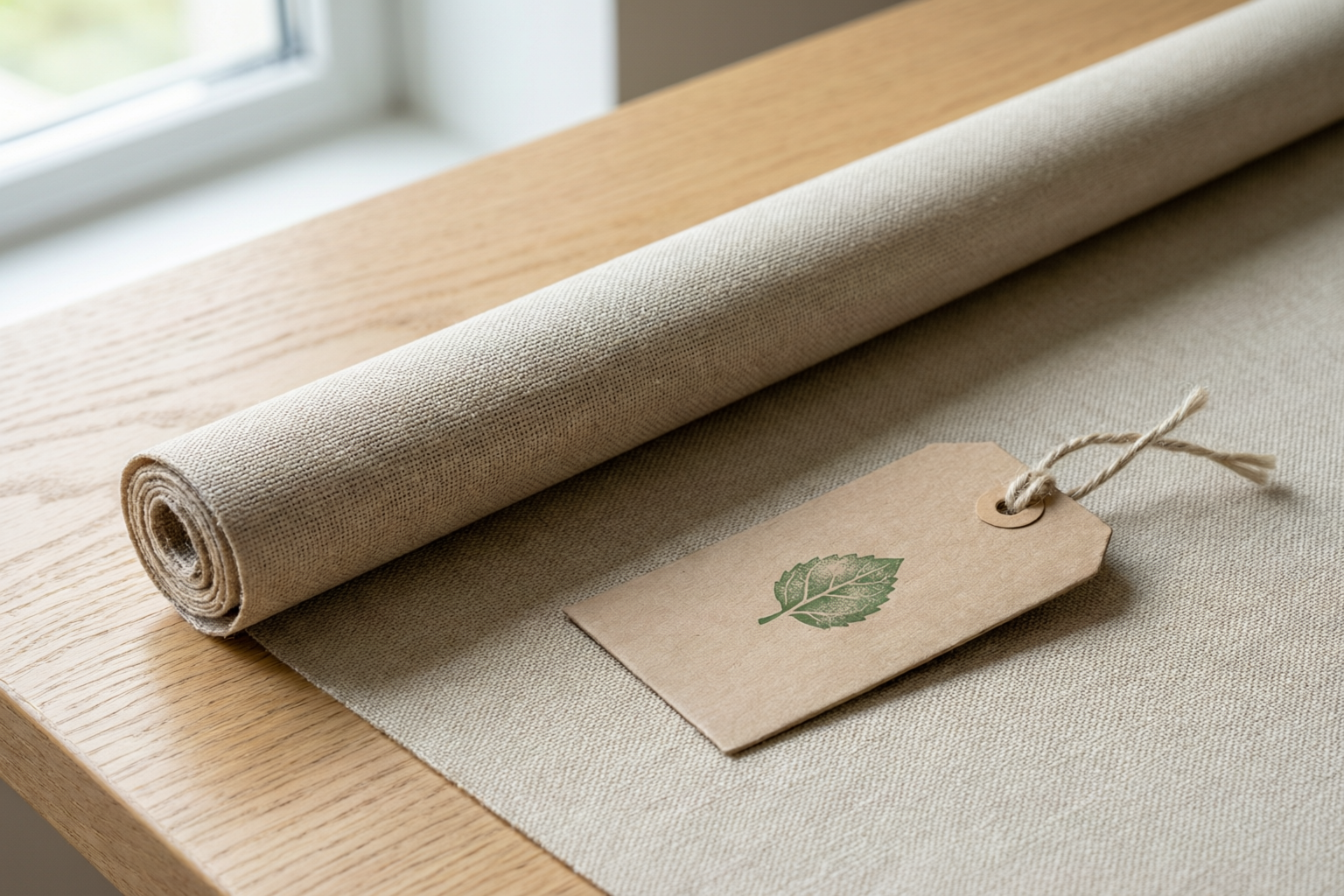
Why certifications matter in roller blind specifications
Window fabric is a large surface area in every room, continuously releasing or resisting emissions, and increasingly subject to green-building audits. A certification is a third-party verification that replaces marketing language with a testable scope. For B2B buyers, certifications serve three practical purposes: they satisfy green-building documentation (LEED, WELL, BREEAM), they reduce indoor air quality risk, and they verify recycled-content claims that would otherwise be unverifiable. The key skill is matching the certification to the claim you need to prove.
OEKO-TEX Standard 100: harmful substances in the finished product
OEKO-TEX Standard 100 tests the finished textile for a regulated list of harmful substances — heavy metals, formaldehyde, pesticides, phthalates and certain dyes. It answers the question: “Is this fabric safe to be in close contact with people?” It does not certify recycled content, and it does not certify emissions over time. For roller blinds in bedrooms, nurseries and healthcare settings, OEKO-TEX Standard 100 is the baseline human-safety credential. Note that certification is product-specific and renewed annually, so ask for the current certificate number and scope.
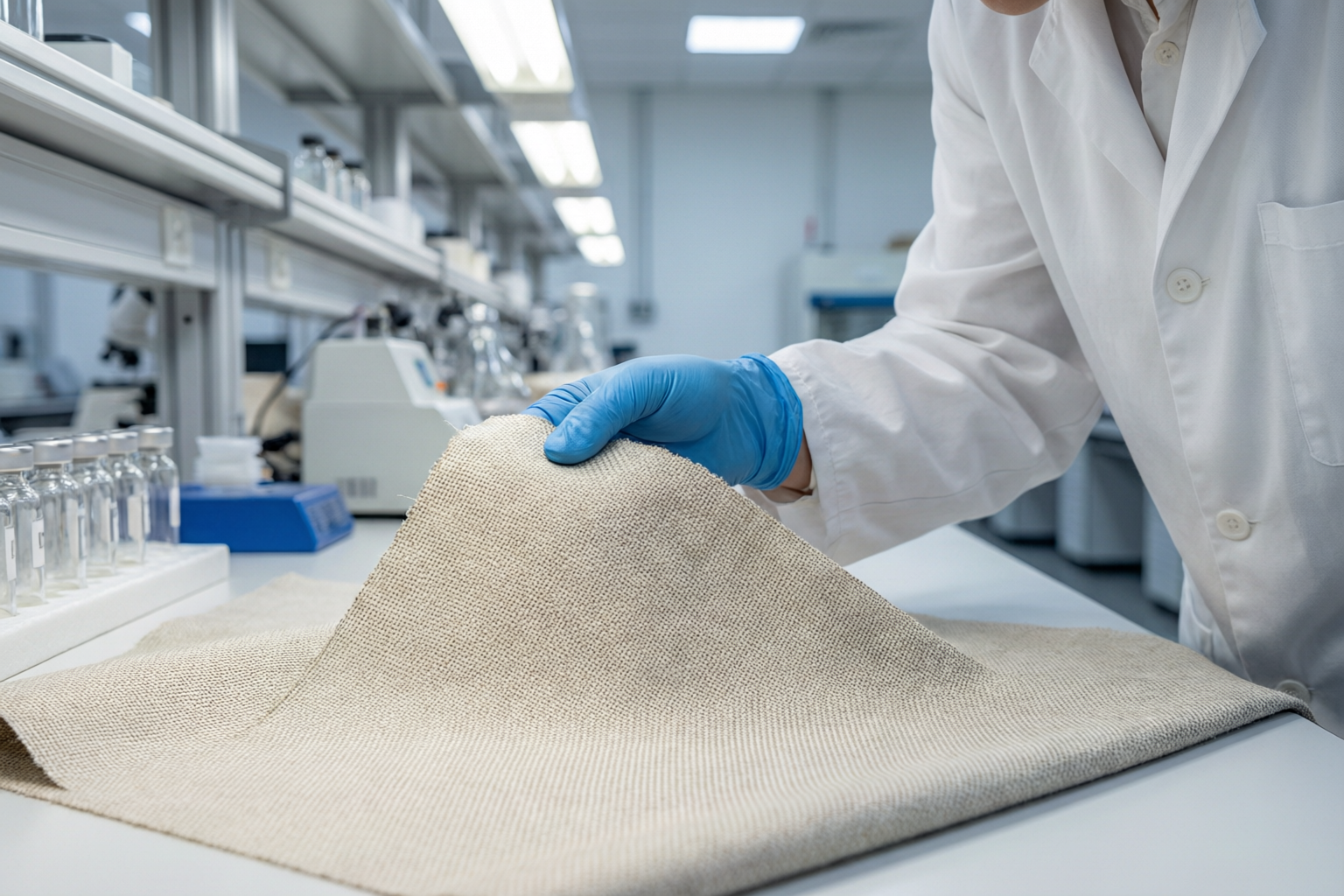
Official OEKO-TEX® video: what STANDARD 100 tests and certifies.
GRS: verified recycled content with chain of custody
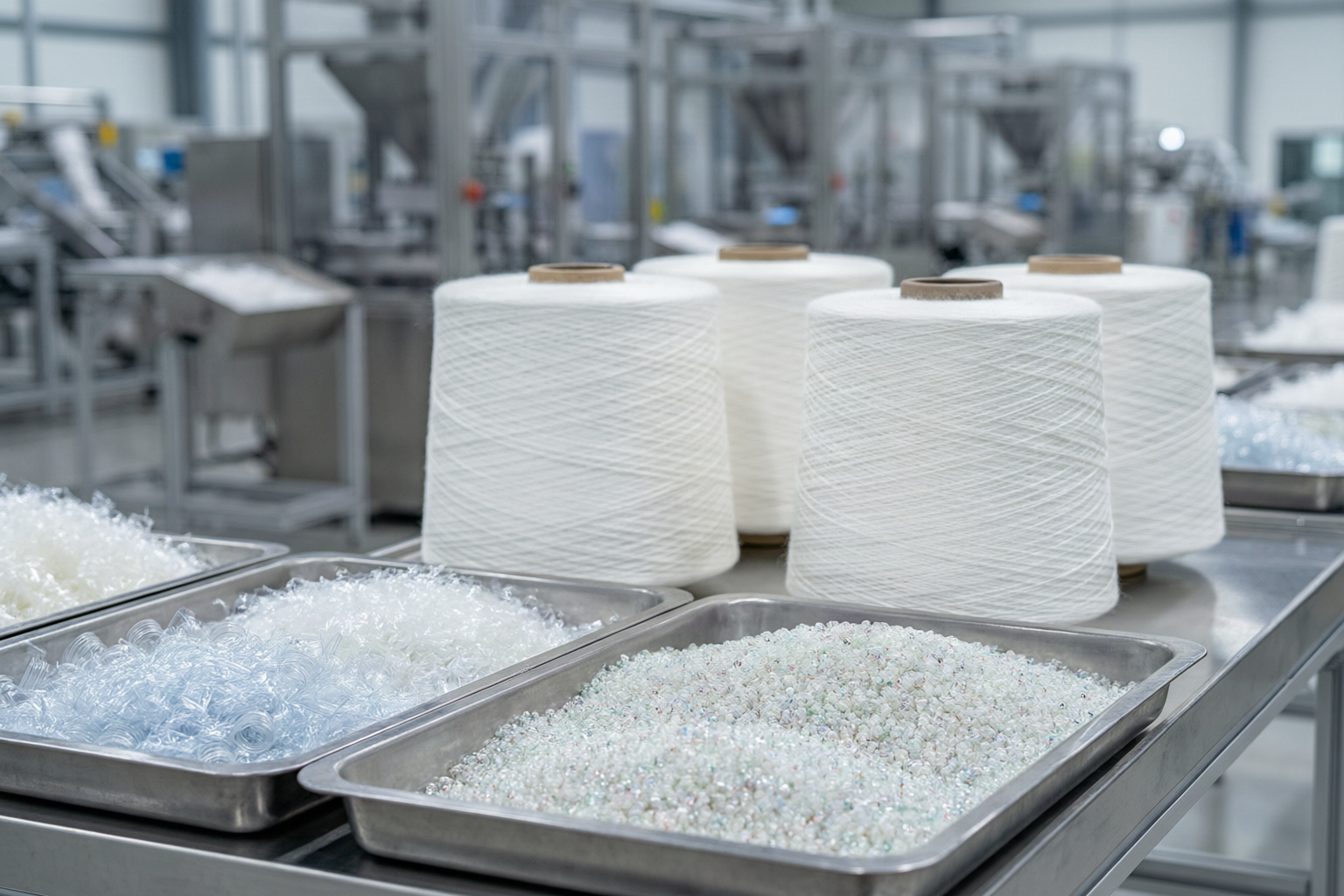
The Global Recycled Standard (GRS) certifies recycled content and tracks it through the supply chain via chain-of-custody audits. A GRS-certified rPET roller blind fabric means the recycled polyester claim is verified from bottle flake to finished roll, and the standard also adds environmental and social criteria at each processing step. GRS answers: “Is the recycled-content percentage real?” It does not test human-ecology or emissions. If your project reports recycled-content tonnage or pursues LEED materials credits, GRS is the document auditors accept.
GREENGUARD Gold: low chemical emissions for indoor air
GREENGUARD Gold (UL) certifies that a product emits low levels of volatile organic compounds (VOCs) over time, measured in environmental chambers. It answers: “Will this fabric degrade my indoor air quality?” It is the certification referenced for sensitive environments — schools, healthcare, and WELL-compliant workplaces. Unlike OEKO-TEX (which tests substance content), GREENGUARD tests emissions. A fabric can pass OEKO-TEX yet still off-gas; GREENGUARD closes that gap.

How the three differ at a glance
- OEKO-TEX Standard 100 — harmful substances in the finished product (human safety).
- GRS — verified recycled content with chain of custody (circularity claims).
- GREENGUARD Gold — low VOC emissions over time (indoor air quality).
They are complementary, not interchangeable. A fully specified sustainable fabric for a WELL hotel project ideally holds all three: safe substances, verified recycled content, and low emissions.
Reading a certification claim: scope matters
Always check the scope of a certificate. A facility can be GRS-certified while a specific fabric line is not; a certificate can cover one colorway, not the whole range. Ask for the certificate number, the certified entity (product vs. factory), the validity date and the covered product list. Reputable suppliers provide these on request and list them on a certifications page.
Which certifications for which project
- Hotels (guest rooms) — OEKO-TEX Standard 100 as baseline; GREENGUARD Gold for premium and wellness positioning.
- Green-building / LEED & WELL — GRS for recycled-content credits; GREENGUARD Gold for low-emitting materials credits.
- Healthcare & education — GREENGUARD Gold prioritized for indoor air; OEKO-TEX for human safety.
- Corporate ESG reporting — GRS to substantiate recycled-content tonnage.
AWT Textile’s certified sustainable ranges
AWT Textile’s sustainability range is built around these certifications. The PF PVC-Free Eco series removes PVC and phthalate plasticizers entirely and is OEKO-TEX and GREENGUARD compliant, supporting LEED and WELL material credits. The RP rPET Recycled series uses GRS-certified recycled polyester — up to 60% rPET on the blackout construction — with chain-of-custody documentation for ESG reporting. Full certificates and test reports are on the Certifications page. For the broader environmental case, see our PVC-Free & Recycled sustainability guide.
Specification checklist
- Confirm the certification matches the claim you must prove (safety, recycled content, or emissions).
- Request certificate number, scope (product vs. facility) and validity date.
- For LEED/WELL, map the certificate to the specific credit (materials, low-emitting materials).
- Verify the certified product list covers your chosen colorway and construction.
- Keep certificates in the project O&M manual for future audits.
Specifying certified blind fabrics for commercial use and offices
For commercial projects — offices, healthcare, education and hospitality — specifiers increasingly combine OEKO-TEX Standard 100 with GREENGUARD Gold as a baseline requirement. OEKO-TEX verifies that the fabric itself is free from harmful substances, while GREENGUARD Gold certifies low chemical emissions for indoor air quality. For office and public-space tenders, pairing these certifications with fire-retardant test reports (NFPA 701, B1) covers the three compliance questions buyers ask first: is it safe to touch, safe to breathe, and safe in a fire.
FAQ: certified blind fabrics for commercial projects
Is OEKO-TEX mandatory for hotel blind fabrics?
Not legally — but many hotel brands and most EU specifiers require OEKO-TEX Standard 100 as a baseline for guest-room textiles. It is the fastest way to prove fabric safety in a tender document.
What does GREENGUARD Gold certification prove?
Low chemical and VOC emissions for indoor air quality. It is most often specified for offices, schools and healthcare spaces, and supports WELL and LEED credit submissions.
How is GRS different from OEKO-TEX?
GRS (Global Recycled Standard) verifies recycled content and chain of custody — it is a sustainability claim, not a safety claim. Use it alongside OEKO-TEX when the brief includes recycled-material targets.
Can AWT supply fabrics with these certifications?
Yes. Our PVC-free and recycled series carry OEKO-TEX and GRS documentation, and we include the relevant test reports with every project quote.
Related guides & fabrics
- PVC-Free & Eco Fabric Series — OEKO-TEX and GRS documented compositions for eco-focused specs
- Fabric Certifications Overview — all certification and FR test reports in one place
Need certified fabrics for your next project?
Tell us which standards your client requires — we’ll provide test reports, certified swatches and a project quote within 24 hours.
FAQ: OEKO-TEX & GREENGUARD Certified Blind Fabrics
What does OEKO-TEX certification mean for blind fabrics?
OEKO-TEX STANDARD 100 tests every component of the fabric (coating, yarn, print) for regulated harmful substances. For commercial use it is the baseline safety certificate buyers specify for offices, hotels and education projects.
Is GREENGUARD certification needed for commercial offices?
GREENGUARD Gold limits VOC emissions from the finished fabric, supporting indoor-air-quality credits such as LEED and WELL. Specify it for sealed, high-occupancy offices; for ventilated spaces OEKO-TEX alone is usually sufficient.
How do I verify certificates from a fabric supplier?
Check the certificate number on the issuer’s public database (OEKO-TEX, UL GREENGUARD, GRS), confirm the named product series matches your order, and check the validity date. A PDF alone is not proof.
Related Guides
PVC-free & recycled fabric guide | Fire-retardant standards NFPA 701 / M1 / B1 | Certified fabric SKUs | Request certificates & samples
Explore the fabric series
- OD Outdoor Shade Fabric series — full specs, pricing & fire ratings
- ME Middle East series — full specs, pricing & fire ratings
- JH Jacquard / Printed series — full specs, pricing & fire ratings
- MT Motorized-Ready series — full specs, pricing & fire ratings
- RP rPET Recycled series — full specs, pricing & fire ratings
- PF PVC-Free Eco series — full specs, pricing & fire ratings
- GR Light Filtering series — full specs, pricing & fire ratings
- ZB Zebra / Day & Night series — full specs, pricing & fire ratings
- JR Screen / Sunscreen series — full specs, pricing & fire ratings
- BR Blackout Series series — full specs, pricing & fire ratings